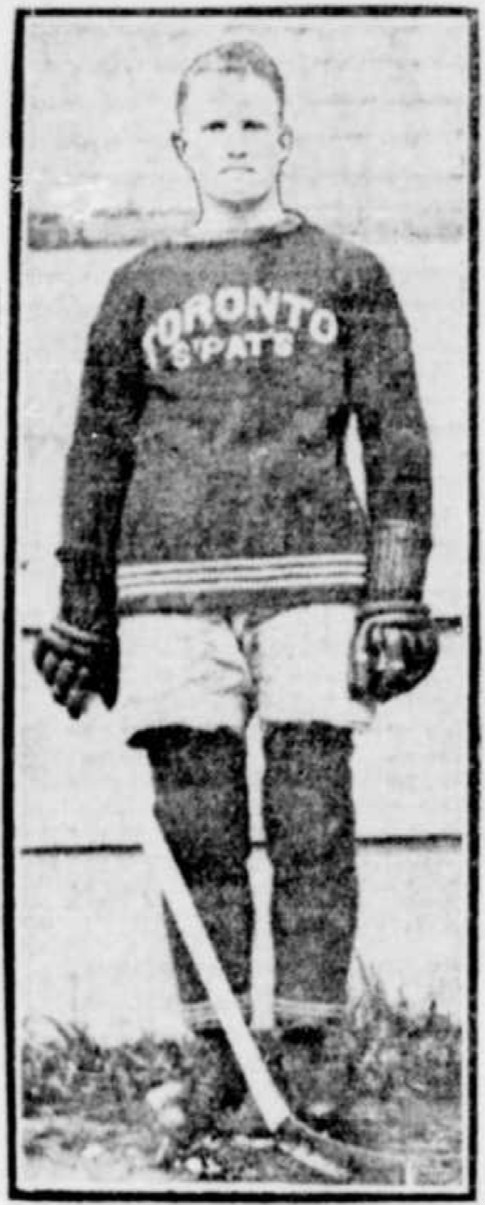
Hap Day
The only man to captain and coach the Leafs: Forging a dynasty through grit, discipline, and an impossible comeback.
Harry 'Hap' Day isn't just a name in the record books; he is the bedrock of the Toronto Maple Leafs identity. A rugged defenceman who evolved into one of hockey's most transformative coaches, Day bridged the gap between the rowdy St. Patricks era and the disciplined dynasty of the 1940s. His tenure defined the franchise with three Stanley Cup victories (1942, 1947, 1948), embodying the grit and tactical evolution that became synonymous with the club during its most dominant decade.
- Role
- Captain (1927-1935), Head Coach (1940-1948)
- Affiliation
- Toronto Maple Leafs
- Stanley Cups as Coach
- 3 (1942, 1945, 1947)
- Career NHL Games Played
- 662
- Hall of Fame Induction
- 1961
Lore & Background
Harry 'Hap' Day arrived in Toronto via trade, quickly becoming the heart of the franchise as it transitioned from the St. Patricks to the Maple Leafs. His playing career was defined by an intimidating physical presence and a keen hockey IQ, earning him the captaincy during a critical period of organizational growth.
However, his coaching legacy truly cements his status in lore. Taking over the bench in 1940, Day inherited a team seeking its first title since 1932. He instilled a disciplined, defensive structure while empowering offensive stars like Syl Apps and Ted Kennedy. Under his guidance, the Leafs achieved the impossible in 1942, rallying from a 3-0 deficit against the Detroit Red Wings to win the Stanley Cup—a feat that remains unique in NHL history.
Day's era was about building a culture that survived the war. He managed the complexities of wartime hockey and post-war adjustments with grace, ensuring the team remained competitive even as players were called away for service. His ability to adapt his strategy while maintaining the core identity of the Leafs created a blueprint for future success.
In Their Own Story
The arena lights hummed over the frozen surface at Maple Leaf Gardens, casting long shadows across the ice where Hap Day paced the bench. The air was thick with the scent of sweat and stale popcorn, a familiar perfume to the man who had worn both the captain's 'C' and now the coach's whistle. He watched his players, the young Ted Kennedy skating hard on the wing, feeling the weight of 1942 pressing down. They were down three games to none against Detroit, a deficit that seemed insurmountable in the eyes of the fans outside.
Day leaned forward, his voice cutting through the noise of the crowd. 'We don't play for the scoreboard,' he told them during the intermission, his gaze steady and unyielding. 'We play for each other.' The game resumed, a grueling battle of checks and saves that stretched into overtime. When the final goal was finally scored, sealing the historic comeback, Day didn't rush to the ice. He stood still for a moment, watching his team erupt in chaos, knowing he had just guided them through fire to claim the ultimate prize.
Reader's Guide
The Hap Day Era (1940-1948) represents the most dominant chapter in Toronto Maple Leafs history prior to the modern age. Defined by an aggressive defensive system and exceptional leadership, this period transformed the franchise from a struggling entity into a Stanley Cup powerhouse. The era is best remembered for the miraculous 1942 comeback against Detroit, which remains the only time any NHL team has overcome a 3-0 series deficit to win the championship.
What defined this chapter was Day's unique ability to balance physical toughness with tactical sophistication. He managed a roster that included legendary figures like Syl Apps and Bob Goldham while navigating the disruptions of World War II, which saw many players leave for military service. Despite these challenges, Day kept the team competitive, securing three Stanley Cup titles in eight years.
This era matters to the club's identity because it established the 'Leafs Way'—a standard of resilience and clutch performance that fans still demand today. It proved that Toronto could not only compete but dominate on hockey's biggest stage. The foundations laid by Day during these turbulent yet triumphant years created a legacy of excellence that the franchise has sought to recapture ever since, making his tenure a permanent pillar of Maple Leafs lore.
Did You Know?
- Hap Day is one of only three individuals in NHL history to win the Stanley Cup as both captain and head coach with the same franchise.
- The famous 1942 comeback against Detroit, orchestrated by Day, remains the only instance in NHL history where a team won a best-of-seven series after losing the first three games.
- Before his coaching success, Day was known as one of the most feared defenders of his era, often engaging in physical battles that set the tone for the entire game.
- Day was inducted into the Hockey Hall of Fame in 1961, recognizing his dual legacy as a player and a builder of the franchise.
Franchise Origins and Early Identity
The Toronto Maple Leafs trace their roots to the chaotic formation of the National Hockey League in 1917. Born from a dispute over the ownership of the Toronto Blueshirts, the league's founders created a new circuit that included a temporary Toronto franchise operated by the Arena Company. Initially known informally as the "Blueshirts" or simply "the Torontos," this inaugural team achieved immediate glory by capturing the first-ever Stanley Cup in 1918 under manager Charlie Querrie and coach Dick Carroll. However, legal battles regarding player rights and financial instability plagued the club's early years, leading to a disastrous 1918–19 season where they posted the franchise's worst winning percentage before operations halted due to the flu pandemic. Following bankruptcy, the team was purchased by Percy and Fred Hambly in 1919, who rebranded the squad as the Toronto St. Patricks. Under this new identity, the club switched its colors from blue to green and secured a second championship in 1922, setting the stage for future transformations while navigating complex ownership changes involving figures like Nathan Nathanson and Jack Bickell.
The Smythe Acquisition and Renaming
A pivotal moment in the franchise's history occurred in 1927 when the team faced potential relocation to Philadelphia by owner C. C. Pyle. Conn Smythe, a former Varsity Blues coach, rallied a group of investors to save the club for Toronto, arguing that civic pride outweighed financial gain. His successful bid of $160,000 allowed him to take control on February 14, 1927, with Jack Bickell serving as president. Smythe immediately rebranded the organization, changing the name from the St. Patricks to the Maple Leafs and moving them into the newly constructed Maple Leaf Gardens in 1931. This era marked a shift toward stability and ambition under Smythe's leadership, who would guide the team for decades. His acquisition not only kept hockey in Toronto but also established a new identity that resonated deeply with fans, replacing the green jerseys of the St. Patricks with the iconic maple leaf imagery that defines the franchise to this day.
Dynastic Success and Historic Drought
Under Conn Smythe's stewardship, the Maple Leafs evolved into one of the NHL's most dominant forces, establishing two distinct dynasties that defined mid-20th-century hockey. The first golden era spanned from 1946 to 1951, while a second period of supremacy lasted from 1961 to 1967. During these combined years, the club captured eight Stanley Cup championships out of eleven possible opportunities, cementing their status as a powerhouse alongside the Montreal Canadiens. Despite this incredible run of success, which includes winning more titles than any team except Montreal, the franchise subsequently endured an agonizing championship drought lasting 57 seasons—the longest in league history. This prolonged absence from the pinnacle of the sport has become a defining characteristic of modern Leafs fandom, contrasting sharply with their historical achievements and fueling intense rivalries with teams like the Boston Bruins, Detroit Red Wings, and Montreal Canadiens.
Legacy, Honors, and Modern Operations
The Maple Leafs boast a rich legacy recognized through numerous Hall of Fame inductions and record-breaking honors. The franchise holds the distinction of retiring nineteen player numbers, including the very first number retired in professional sports history, highlighting the deep reverence held for its legendary athletes. Today, the team operates as a cornerstone of Maple Leaf Sports & Entertainment, competing in the Atlantic Division of the Eastern Conference. Their home arena has evolved significantly over time; after playing at Mutual Street Arena and then Maple Leaf Gardens, they have called Scotiabank Arena home since 1999. The organization maintains a strong developmental pipeline through its American Hockey League affiliate, the Toronto Marlies. With broadcasting rights shared between BCE Inc. and Rogers Communications, the club remains a central pillar of Toronto's sports landscape, continuing to navigate the pressures of modern hockey while honoring a storied past filled with both triumphs and challenges.
Gallery