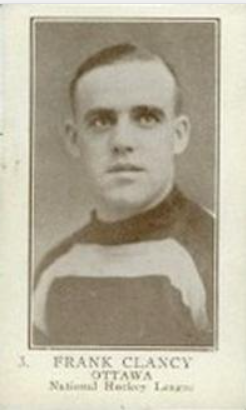
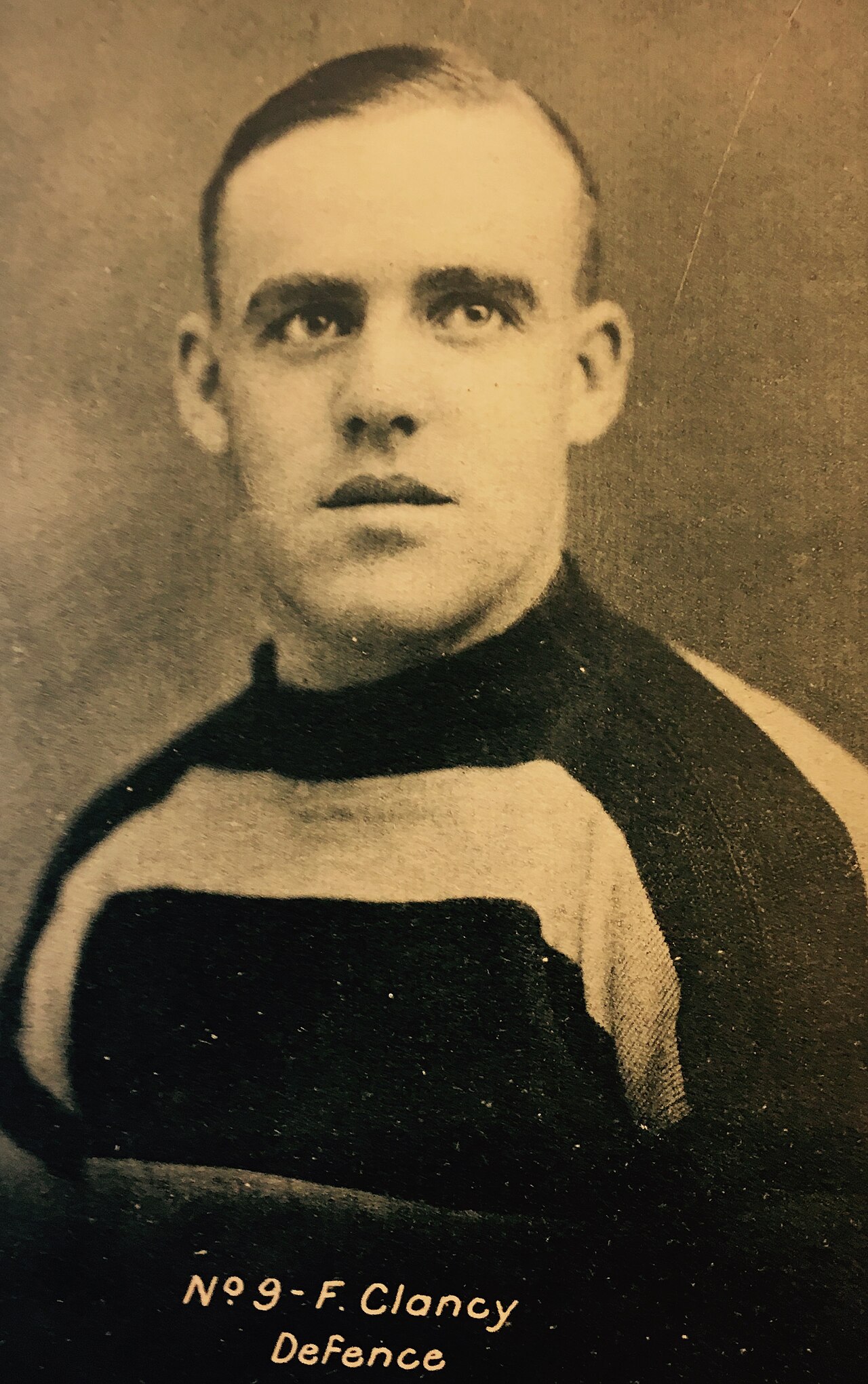
King Clancy
The towering leader who forged the Leafs' identity with unyielding toughness on the blue line and wisdom in the boardroom.
Few names carry the weight of Frank "King" Clancy in Toronto hockey history. As captain during the franchise's metamorphosis from St. Patricks to Maple Leafs, he brought a colossal physical presence that defined an era of survival. His tenure didn't end with his skates; as a coach and executive, Clancy remained a constant architect of the club's identity through decades of upheaval.
- Position
- Defenceman
- Team Affiliation
- Toronto St. Patricks / Maple Leafs
- Hall of Fame Induction
- 1958 (NHL)
- Primary Era
- 1920s–1940s
- Legacy Role
- Captain & Executive
Lore & Background
Standing 6-foot-3 on an ice surface that demanded smaller men, Clancy ruled the defensive zone with a rare blend of brute strength and finesse. His loyalty ran deep; even after being traded to Ottawa in late 1930—missing the 1932 Stanley Cup run—he laid the defensive groundwork Smythe relied upon. He returned not as a player, but as a mentor, ensuring the "Clancy culture" of resilience survived long after his final shift.
In Their Own Story
The old Arena Gardens echoed with the scrape of skates against frozen water. Clancy stood at the blue line, his jersey heavy with sweat and ice chips. A Montreal forward charged, eyes locked on the net. There was no hesitation in King's stance; he absorbed the hit, cleared the puck down the ice, and signaled to his winger. He wasn't just playing a game; he was defending a standard. The crowd roared, sensing that as long as Clancy stood tall, Toronto would never truly fall.
Reader's Guide
Clancy's career maps the franchise's earliest professional struggles and triumphs. He captained the team through the 1927 name change and served as a stabilizer during Conn Smythe’s acquisition, bridging the gap to the post-war championships. While his playing days ended before the first Leafs Cup, his administrative influence persisted into the 1940s and 50s, navigating turbulent ownership changes. Understanding Clancy is essential to understanding how Toronto survived its infancy; he was less a statistician than a guardian of the franchise's soul during its most vulnerable years.
Did You Know?
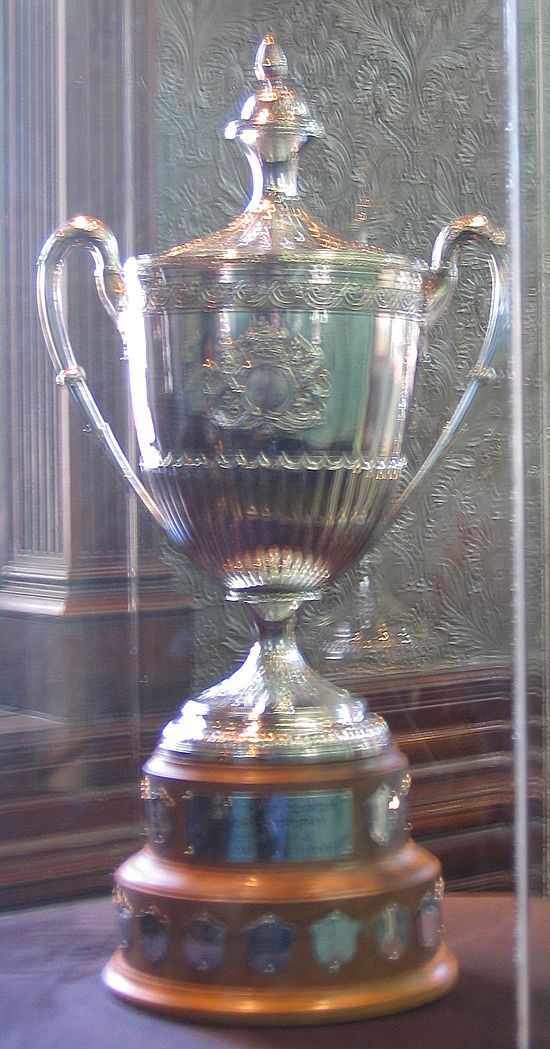
- The King Clancy Memorial Trophy is awarded annually for humanitarian leadership on and off the ice.
- He played both defenceman and right wing during his NHL career.
- Clancy earned the nickname "King" early in his career due to his commanding presence.
- He was inducted into the Hockey Hall of Fame as a player in 1958.
Playing Career and Unique Feats
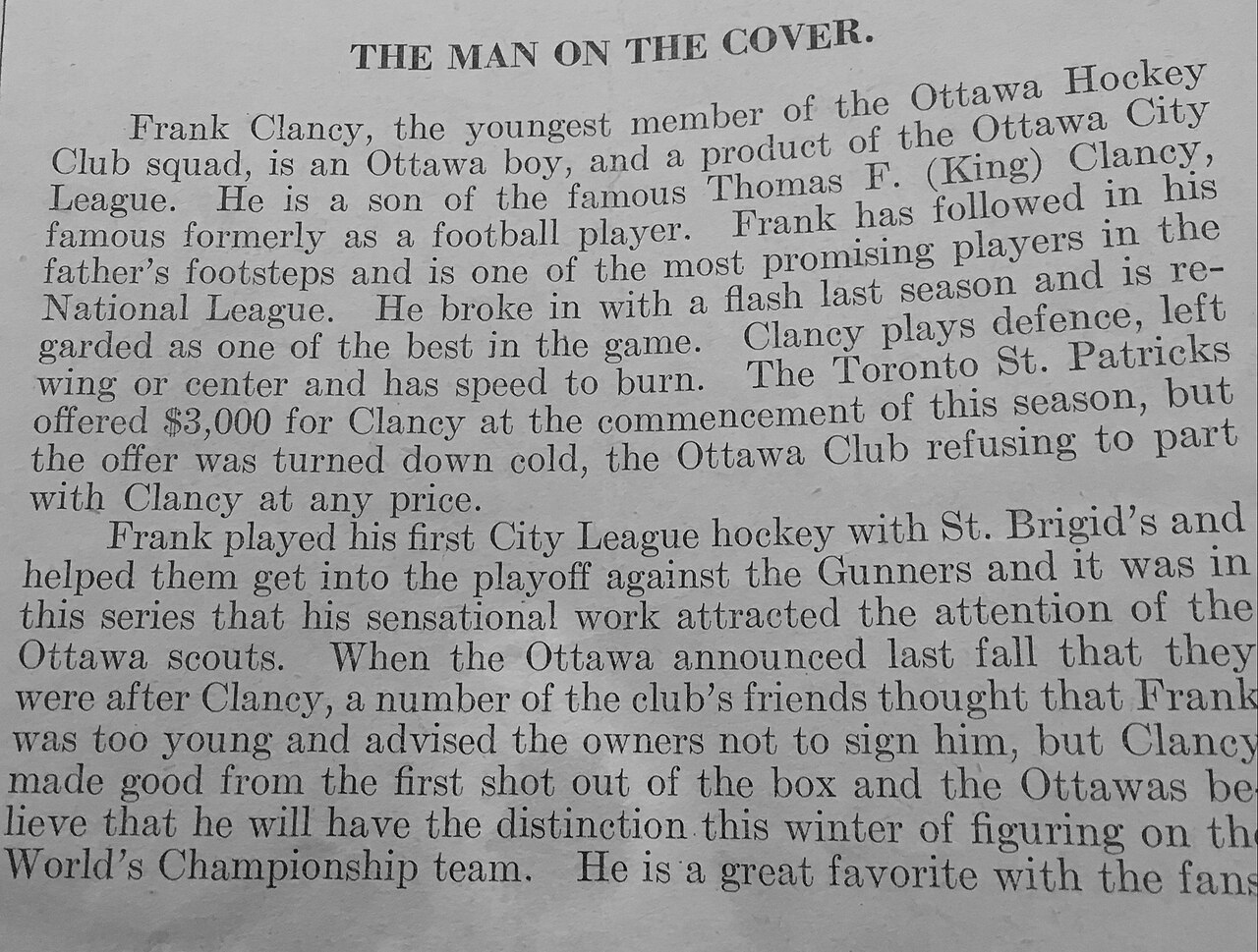
Francis Michael "King" Clancy carved out a legendary 16-season NHL career defined by his tenacity despite his small stature for a defenseman. Beginning with his hometown Ottawa Senators, he became a cornerstone of two Stanley Cup victories in 1923 and 1927. His reputation was built on being fast, tough, and unyielding, though historian Brian McFarlane noted the humorous anecdote that Clancy started a thousand fights but never won one. His most singular achievement occurred during a March 1923 Stanley Cup game against Edmonton; when his goaltender received a penalty, Clancy stepped into the net to serve the time, becoming the only player in NHL history to play all six positions in a single game. After a prolific season with Ottawa, he was traded to the Toronto Maple Leafs in 1930 for a significant fee. He continued his success there, adding another Stanley Cup ring in 1932 before retiring in 1937 as the league's all-time leading scoring defenseman with 283 points.
Post-Playing Career and Coaching
Following his retirement from active play, Clancy immediately transitioned into leadership roles, briefly coaching the Montreal Maroons before spending eleven seasons officiating NHL games. His return to management began in 1949 when he coached the Cincinnati Mohawks of the AHL, though he was released after two losing campaigns. He soon rejoined the Maple Leafs organization to coach their Pittsburgh Hornets affiliate, where he achieved significant success by winning the Calder Cup championship in 1952 and reaching the finals again the following year. This performance earned him the head coaching job for the Toronto Maple Leafs starting in the 1953-54 season. Although his three-year tenure as head coach saw declining team results, Clancy remained a vital figure within the organization. He served as assistant general manager under Conn Smythe and later Punch Imlach, eventually becoming a vice-president after Harold Ballard took control of the franchise in the early 1970s.
Legacy and Honors
King Clancy's profound impact on hockey is reflected in his numerous accolades and enduring tributes. He was inducted into the Hockey Hall of Fame in 1958, followed by inductions into Canada's Sports Hall of Fame and the Ontario Sports Hall of Fame. His jersey number seven was retired by the Toronto Maple Leafs as an Honoured Number, a distinction shared with Tim Horton, recognizing his status as one of the franchise's most important figures. In recognition of his humanitarian spirit and leadership, the NHL established the King Clancy Memorial Trophy, awarded annually to players who demonstrate exceptional community contributions alongside on-ice excellence. His historical significance was further cemented in 2017 when he was named one of the '100 Greatest NHL Players' in history. Additionally, he holds the distinction of being the last surviving member of the 1922-23 Stanley Cup-winning Ottawa Senators team.
Life Beyond the Spotlight
Clancy's connection to hockey spanned an incredible 65 years, a record tenure at the time of his death that was later surpassed by John Bucyk. His nickname "King" was inherited from his father, Tom Clancy, who played football for the Ottawa Rough Riders as the original King Clancy. Throughout his long life in Toronto, he maintained close friendships with powerful figures like Conn Smythe and Harold Ballard, though his role under Ballard was sometimes described by contemporaries as ceremonial. He remained active in the front office until his final days, even stepping in as acting coach for 15 games during the 1971-72 season to help the team while John McLellan recovered from illness. Clancy passed away on November 8, 1986, at age 84 following complications from a gallbladder surgery that led to septic shock. He was interred in Mount Hope Catholic Cemetery, leaving behind a legacy as one of hockey's most enduring and versatile figures.
Gallery