Stanley Cup (1949)
Three-Peat Dynasty: Leafs Sweep Rival Red Wings for Unassailable Glory.
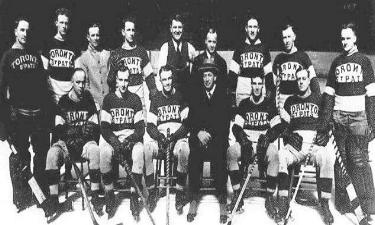
When the final horn blew in April 1949, the Maple Leafs didn't just capture a trophy; they cemented a dynasty. This victory marked the franchise's third consecutive championship, solidifying the legacy of the team's core leadership under Hall of Fame coach Hap Day and captain Syl Apps. By completing this rare three-peat, Toronto joined an elite group of teams that had last achieved such dominance with the Montreal Canadiens in 1930-32.
- Coach
- Hap Day
- Captain
- Syl Apps
- Opponent Defeated
- Detroit Red Wings
- Series Result
- 4-0 (Sweep)
- Consecutive Titles
- 3rd in a row
- Key Scorers
- Ted Kennedy, Max Bentley, Gus Bodnar
Lore & Background
By 1949, the Maple Leafs had already established themselves as a powerhouse, having won championships in 1942 and 1947. The 1948-49 season saw the team led by the indomitable Syl Apps, who balanced leadership with playmaking brilliance. The core of the roster included Ted Kennedy, whose gritty determination became the heart of the team, and Max Bentley, a dynamic centerman acquired in a blockbuster trade that reshaped the league's balance of power.
The playoffs were a masterclass in defensive structure and opportunistic scoring. Facing the Detroit Red Wings, who boasted their own star-studded lineup including Sid Abel and Gordie Howe, the Leafs imposed their will immediately. The series was defined by physical play and goaltending excellence from Turk Broda, who stood tall against Detroit's offense. Winning in a four-game sweep demonstrated a level of dominance that few teams in NHL history have ever achieved against such formidable competition.
This victory closed out an era of unprecedented success for the franchise under Hap Day. It was the final time the Leafs would win three consecutive Cups, making the 1949 trophy a unique artifact of their golden age. The celebration in Toronto was raucous, with fans flooding the streets to honor a team that had brought glory back-to-back-to-back during a post-war period when hockey was becoming the defining sport of the nation.
In Their Own Story
The air inside Maple Leaf Gardens was thick with steam and tension as the final seconds ticked away on the clock. The scoreboard read nothing but silence for Detroit; the Leafs held a commanding lead in the series, now standing just moments from history. Ted Kennedy skated hard toward the net, his stick finding the loose puck amidst a tangle of sticks and skates. With a deft wrist shot that seemed to defy the chaos around him, he sent the rubber disc past the Detroit goaltender.
The buzzer sounded, and for a split second, there was silence before the roar erupted from the stands. Hap Day stood on the bench, his face a mask of stoic relief turning into pure elation. Syl Apps raised his arms, the captain acknowledging the sea of blue and white that filled the arena. Turk Broda skated to the crease, his helmet torn from his head as he joined the pile of celebrating teammates.
Reader's Guide
The 1949 Stanley Cup victory represents the culmination of the Toronto Maple Leafs' most dominant era, securing their third consecutive championship. This achievement occurred during the 1948-49 NHL season, concluding in April 1949 when the Leafs swept the Detroit Red Wings four games to none.
The significance of this win cannot be overstated in hockey history. It marked the first time a team had won three straight Stanley Cups since the Montreal Canadiens achieved the feat nearly two decades prior. The series against Detroit was particularly notable for its one-sided nature, showcasing the Leafs' superior depth and defensive cohesion led by coach Hap Day.
Key figures like captain Syl Apps and center Ted Kennedy were instrumental in this run. Their ability to control the pace of the game and capitalize on scoring chances defined the team's identity. The victory solidified Toronto's status as a premier hockey city and set a high watermark for future generations of Leafs fans. It remains a pivotal moment that defines the franchise's golden age, remembered fondly for its completeness and dominance.
Did You Know?
- The 1949 victory was the third straight Stanley Cup win for the Maple Leafs, matching the Montreal Canadiens' record set in 1930-32.
- Turk Broda's goaltending was pivotal; he allowed only a handful of goals throughout the entire playoff run against Detroit.
- This remains the last time the Toronto Maple Leafs won three consecutive Stanley Cups in franchise history.
- The series sweep over the Red Wings in 1949 is one of the few times a team has swept a Finals opponent during that era.
Historic Comeback and Series Structure
The 1942 Stanley Cup Final stands as a singular anomaly in North American sports history, marking the first time any team overcame a three-game deficit to win a best-of-seven championship series. The Toronto Maple Leafs achieved this unprecedented feat against the Detroit Red Wings, becoming the only franchise in NHL history to reverse a 3-0 hole in the Stanley Cup Final itself. While other teams have managed similar comebacks in later playoff rounds, no other club has duplicated this specific achievement in the championship round. This series also holds the distinction of being the first Final to extend to a full seven games, setting a dramatic precedent for future high-stakes hockey. The narrative arc shifted from near-certain elimination to a miraculous victory, as Toronto won four consecutive games after losing the opening three. This reverse sweep remains a unique statistical milestone, highlighting the unpredictable nature of playoff hockey where momentum can shift drastically between contests.
Road to the Championship
Before meeting in the Finals, both teams navigated distinct paths through the playoffs to secure their spots. The Toronto Maple Leafs defeated the New York Rangers in a best-of-seven semifinal series, winning four games to two to advance directly to the championship round. Conversely, the Detroit Red Wings faced a more grueling gauntlet, having to win two separate best-of-three series against top-tier opposition. They first eliminated the Montreal Canadiens with a 2-1 victory before sweeping the Boston Bruins in two straight games to reach the Final. These preliminary rounds set the stage for a clash between a team that had proven its resilience over a longer format and one that had dominated shorter, intense matchups. The disparity in their playoff experiences contributed to the psychological dynamics of the series, with Detroit entering as heavy favorites after their clean sweeps, while Toronto relied on depth and experience from their seven-game battle against New York.
Drama and Discipline in Game Four
Game four served as the turning point where the Maple Leafs staved off elimination amidst a chaotic atmosphere that nearly descended into violence. After trailing 2-0 early, Toronto rallied to force overtime with a dramatic late goal by Nick Metz, securing a 4-3 victory. The game concluded in near-riot conditions following controversial officiating decisions by referee Mel Harwood. Detroit players Eddie Wares and Don Grosso were fined for misconduct and arguing, while Red Wings coach Jack Adams physically attacked the official after a profanity-laced outburst. The situation escalated so severely that fans littered the ice with debris, including a woman's shoe, forcing NHL President Frank Calder to be escorted out under police protection. In response, Calder suspended Adams indefinitely and levied heavy fines on the players involved. This incident highlighted the intense emotions of the series and marked a low point in sportsmanship before Toronto regained composure for their eventual comeback.
The Decisive Final Games
Following the chaos of Game Four, the series shifted back to Toronto where the Maple Leafs dominated Game five with a stunning 9-3 victory. Coach Hap Day's decision to bench injured players and rely on Don Metz paid off handsomely, as Metz contributed three goals and two assists in a mismatch that saw Toronto outscore Detroit significantly. The momentum continued into Game six in Detroit, where the Red Wings promised discipline but still fell short against goaltender Turk Broda's series-only shutout performance. A fan even threw a three-pound perch onto the ice during this tense contest. The deciding seventh game drew a record-breaking crowd of 16,218 fans in Toronto. Despite Detroit taking an early lead through Syd Howe, the Leafs capitalized on a power play opportunity in the third period. Sweeney Schriner scored just as the penalty expired to tie the game, setting up the dramatic conclusion that would cement Toronto's place in history.
Gallery